Why don't birds usually get shocked by power lines?
Short answer
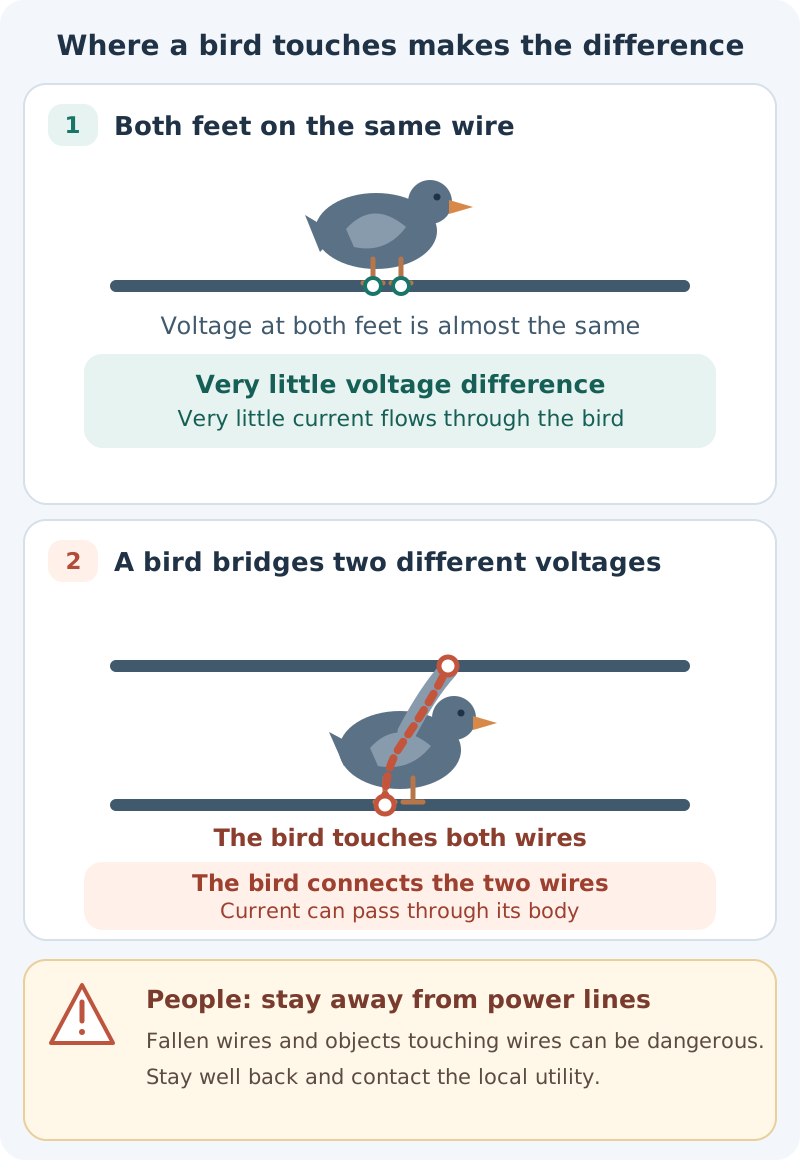
Voltage measures the electrical push that can move current. Current is electricity flowing from place to place. When a bird grips the same wire with both feet, the voltage is almost the same at both feet. Very little current then flows through its body, so it is unlikely to get a shock.
How it works
Current can flow through a body when the body connects two places with different voltages. A bird’s feet touch two nearby points on the same wire, where the voltage is almost the same.
When can a bird get a shock?
If a bird also touches a second wire at a different voltage, or metal hardware connected to the ground, current can flow through its body. This can badly injure or kill the bird.
Key point
A bird’s body can conduct electricity. Dry feathers make it harder for electricity to pass through, but wet feathers can let it pass more easily. A bird’s size and the spacing between wires and metal parts also affect the risk.
People must stay away from power lines
This explains a bird on one wire; it does not mean power lines are safe for people. High-voltage lines can shock someone who gets too close, even without direct contact. If you see a fallen wire or something touching a wire, stay well away and contact the local utility.