Why does eating something cold give you a brain freeze?
Short answer
A very cold food or drink can trigger a brief headache when it touches the roof of your mouth or the back of your throat. The pain may feel as if it is in your forehead or temples, even though the cold started in your mouth.
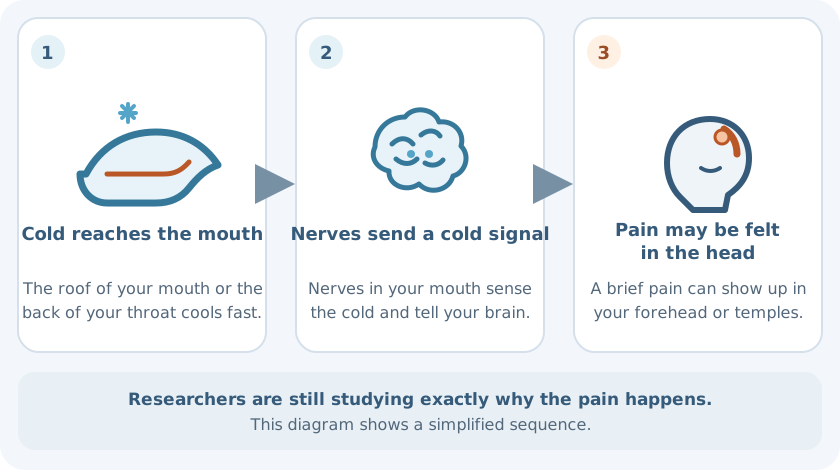
How it happens
Nerves in the roof of your mouth and the back of your throat sense the sudden cold and carry signals to your brain. In some people, a short pain follows in the forehead or temples.
This is called a cold-stimulus headache. Common names include “brain freeze” and “ice-cream headache.” An international system for classifying headaches describes it as a brief pain in the forehead or temples after cold food or drink touches the roof of the mouth or the back of the throat.
Why does the pain feel like it is in your head?
The trigeminal nerve carries sensation from parts of the mouth and face to the brain. A signal from the roof of the mouth can sometimes be felt as pain somewhere else, such as the forehead or temples. Pain felt away from its source is called referred pain.
In experiments, some people felt temple pain after a cold stimulus was placed on the roof of the mouth. Researchers have also studied changes in blood flow in the brain, but the results differ. The exact path from the cold stimulus to the headache is still not fully understood.
What can you do?
Pause the cold food or drink. The pain usually fades soon. The international classification describes this type of headache as ending within 10 minutes after the cold stimulus is removed. Eating crushed ice quickly is especially likely to trigger it, but it can happen even when you eat ice cream slowly.
Key point
Your brain is not actually freezing. A cold stimulus in your mouth can cause temporary pain in your head. Why the pain appears in a different place is still being studied.