Why does Mars look red?
The short answer
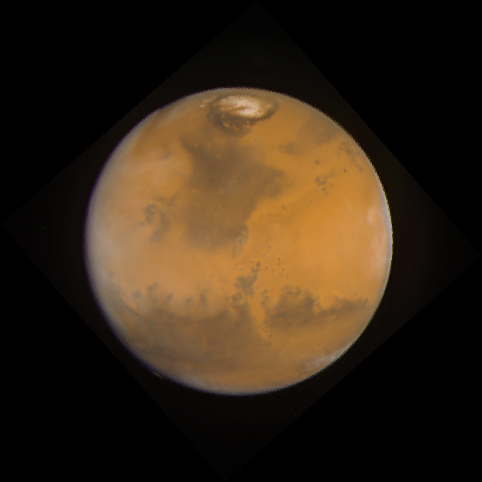
Fine dust containing reddish iron minerals covers much of Mars. Wind lifts some of this dust into the air, so the whole planet looks reddish from far away.
Why is the dust red?
When iron reacts with oxygen and other substances, it can form red-brown minerals, natural materials that make up rocks, much like rust on Earth. Mars has iron-bearing minerals in its rocks and soil. Wind spreads fine dust across the ground and into the air.
What have newer studies found?
A 2025 study found evidence that a natural iron mineral called “ferrihydrite” — a material that contains iron and water — may be a major part of Mars’ red dust. The researchers compared observations from spacecraft and rovers with Mars-like dust they made in a laboratory.
If this mineral is widespread, it may mean that ancient Mars once had more water than it does today. But researchers are still studying which minerals create the color and how they formed. The study does not show that life existed on Mars.
Mars is not red everywhere
NASA notes that the Martian surface also has brown, gold, and tan colors. Different places have different rocks and minerals. “Red Planet” does not mean that every part of Mars is the same color.