Why does clicking a mechanical pencil move its lead forward?
The short answer
In many click-type mechanical pencils, pressing the button loosens a part inside called the chuck. Releasing the button lets the chuck grip the lead again, with help from a spring. Repeating this small movement feeds the lead forward a little at a time.
The chuck is the part that grips the lead
The chuck holds the lead in place while you write. In a common design, its narrow end is split into small sections. A ring around the chuck helps it open and close. When the chuck closes, it holds the lead. When it opens, the lead can move forward.
What happens when you click?
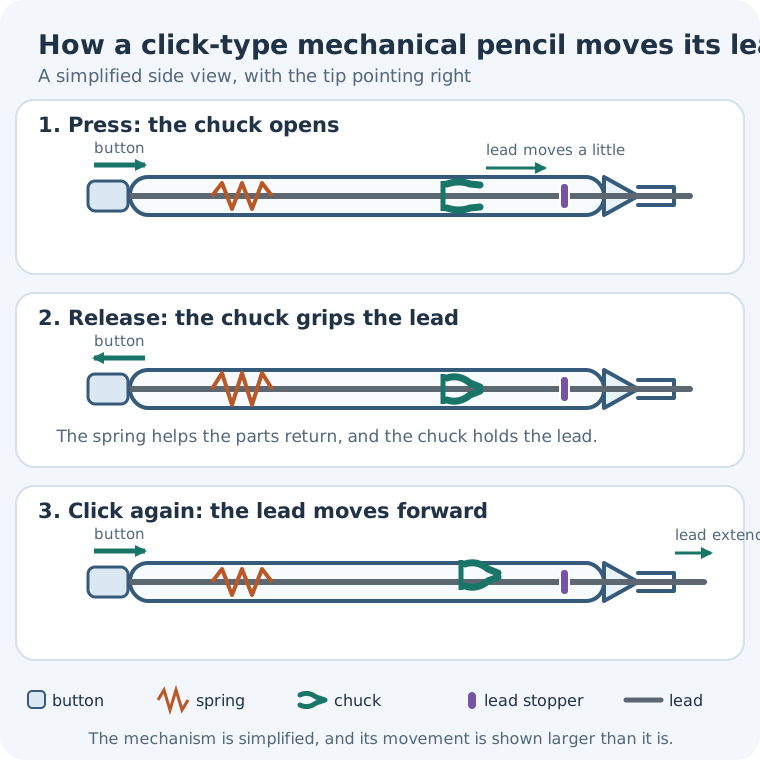
- When you first load a lead, point the pencil downward. Gravity lets the lead slide behind the chuck.
- Press the button. The chuck opens, and the lead moves to a small lead stopper near the tip. The stopper keeps the lead from falling out while the chuck is open.
- Release the button. A spring helps the parts return, and the chuck grips the lead.
- Click again, and the chuck moves forward with the lead for a short distance. When you release the button, the chuck returns and grips the lead again. Repeating this cycle feeds the lead out a little at a time.
Does the button push the lead directly?
Not by itself. The button moves parts inside the pencil. The chuck alternates between holding and releasing the lead, while the spring helps the parts return. Together, these small movements feed the lead forward.
Do all mechanical pencils work this way?
This article describes a common click-type design. Some mechanical pencils feed lead when you shake them, and the shapes and movements of the parts can vary from one model to another.
Key point
In a click-type mechanical pencil, the chuck grips and releases the lead as the spring returns the mechanism. Each cycle moves the lead forward a little.