Why do we get a fever?
The short answer
A fever is one of the body's responses to infection or illness. Raising body temperature can support immune activity and make conditions less favorable for some pathogens.
Is fever a disease?
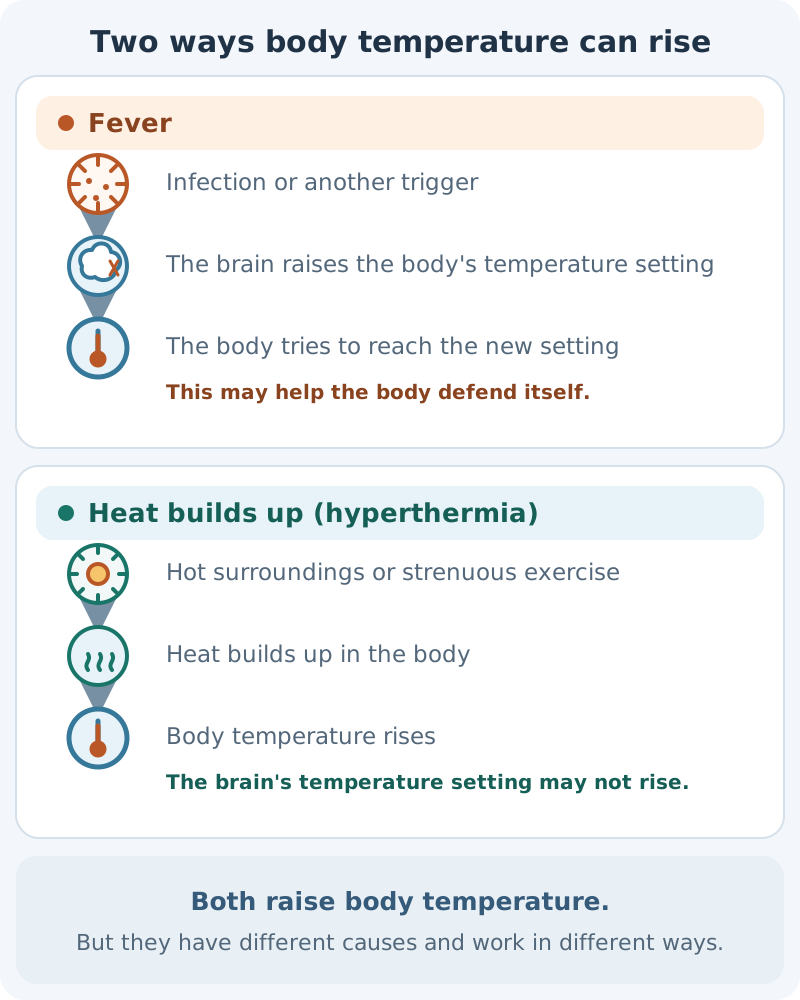
During a fever, the brain raises the body's temperature setting. Infection is a common cause, but some medicines and inflammation (the body's response to injury or irritation) can also trigger a fever. A body temperature that rises too high after time in a hot place or strenuous exercise is different; this is called hyperthermia. Temperature also varies with the time of day and where it is measured, so one number cannot identify the cause. Learn how fever differs from hyperthermia, and why fever can cause chills, in “Why can a fever cause chills?”.
How should we think about it?
Rest, fluids, and watching for changes are common basic steps. Seek medical advice for a high or persistent fever or trouble breathing.
After time in a hot place or strenuous exercise, confusion, a seizure, or not responding normally can be emergency signs of heatstroke. Call your local emergency number right away. Move the person to a cool place and cool their skin with cool, wet cloths or water while waiting for help. Do not give the person anything to drink if they are not fully alert or are vomiting. Fever medicines do not treat heatstroke and may be harmful.
A baby younger than 3 months with a rectal temperature of 38°C (100.4°F) or higher needs prompt medical advice, even if they seem well. Follow local guidance on temperature measurement and where to seek care. Medication and dosage depend on age and health.
Sources
- MedlinePlus: Fever
- MedlinePlus Medical Encyclopedia: Fever
- MedlinePlus Medical Encyclopedia: When your baby or infant has a fever
- MSD Manual Professional: Fever
- MedlinePlus Medical Encyclopedia: Heat emergencies
- Children and Families Agency (Japan): Guidelines for Infection Control in Childcare Facilities (Japanese; revised 2023)
This article provides general information and is not a diagnosis or a substitute for medical care.