Why do some birds fly in a V formation?
The short answer
A bird behind and to one side can use rising air made by the wings ahead. This airflow gives it some help staying aloft, so flying in formation can reduce the effort of flight. A study of pelicans also found lower heart rates when they flew in a group.
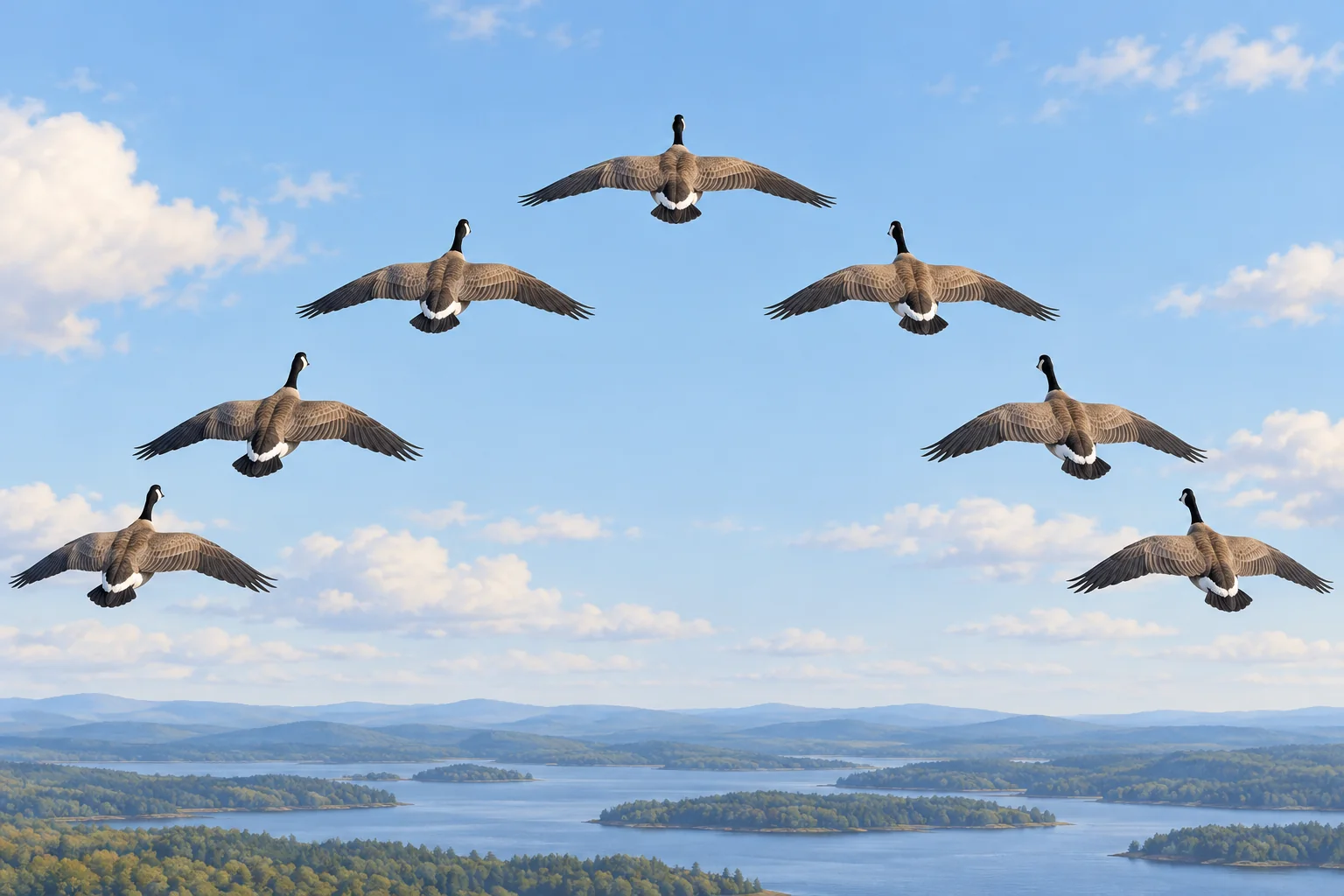
Wings leave moving air behind
A bird pushes air downward with its wings to stay up. Near each wingtip, the air swirls and leaves a wake with places where air rises and places where it sinks. The rising part is called upwash. A following bird can use this upwash as a little extra lift.
Why fly a little to one side?
A bird flying just behind and to one side of another can reach the upwash near that bird’s wingtips. Several birds can line up this way along the two arms of a V. They keep adjusting their positions and wingbeats as they fly; they do not stop flapping.
What have researchers found?
In a 2001 study, researchers measured the heart rates of great white pelicans trained to fly in formation. Heart rate was used as an estimate of energy use. The pelicans’ heart rates were lower in formation flight than when flying alone, which showed an energy benefit under those conditions.
A 2014 study tracked the positions and wingbeats of northern bald ibises. In a V, the birds flew where they could use rising air from the bird ahead and matched the paths of their wingtips. When one bird flew directly behind another, their wingbeats moved in opposite phases, which the researchers interpreted as a way to avoid sinking air.
Does this apply to every bird?
These studies examined particular species and flight conditions. They do not show that every bird flies in a V or gets the same benefit. V formation is one way some birds can use the moving air around a flock; it is not a rule for all birds.